By William Weiner June 10, 2026
DreamHost recently announced they are shutting down their hosted Mailman service. If you run a mailing list there, you have until July 31 to figure out where to go.
The announcement landed badly. Community forums and Reddit threads filled up quickly – not just with people asking what to do next, but with people who were genuinely angry. And the anger has been spilling over into broader conversations about DreamHost as a company.
I want to offer a take that tries to be fair to everyone involved, because I think the situation is more interesting than a simple “DreamHost did a bad thing.”
The decision itself is defensible
Mailman is roughly 25 years old. It was built in an era when running a mailing list meant managing a server, and the software reflects that. To understand why a hosting company would want to exit it, it helps to look at what Mailman is actually being asked to do in 2026 – and how poorly it is equipped to do it.
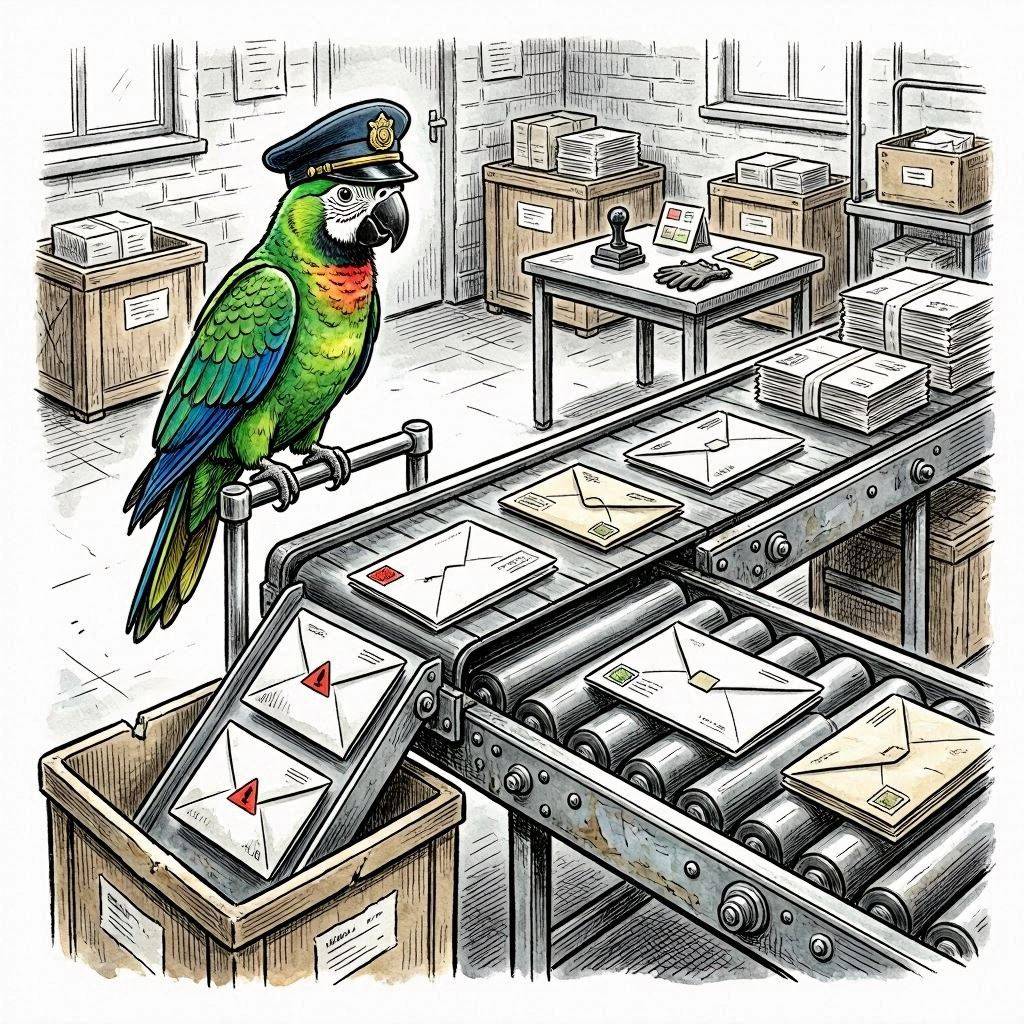
Email is a different threat environment than it was in 2000.
When Mailman was built, email was mostly plain text and the threats were relatively simple. Today, HTML email is the norm, and with it comes an entire attack surface that Mailman has no answer for:
- Tracking pixels and CSS-based trackers embedded in message bodies reveal when members read a message, from what location, and on what device. Mailman passes these through unchanged.
- Fingerprinting links – URLs constructed to identify the recipient – go to members unmodified. Senders can build profiles of your members’ reading habits without anyone noticing.
- Malicious URLs, phishing links, and dangerous attachments receive no systematic inspection. Whatever arrives in the inbound message is what members receive.
- AI-generated phishing has made the volume and sophistication of malicious email dramatically harder to detect by eye. Mailman was designed for an era when a human could reasonably judge what looked suspicious.
- AI prompt injection – malicious instructions hidden inside email content intended to manipulate AI agents that process email on a recipient’s behalf – is an emerging threat that list software built before AI existed has no framework to address.
Member privacy is structurally unprotected.
Mailman’s address model was designed for a world where list membership was a casual thing. Member email addresses appear in headers and are visible to senders. Depending on configuration, they can be visible to each other. Monthly subscription reminders go out in plain text, including passwords.
When a list member gets compromised – their email account hacked, their device stolen, their credentials phished – the attacker inherits everything in that inbox. With Mailman, that includes the list address, the member’s subscription status, and potentially a significant window into who else is on the list and how actively they participate. The blast radius of a single member compromise can extend to the entire list. The list admin has no control over this and no visibility into it when it happens.
The infrastructure doesn’t fit modern cloud deployment.
Mailman was designed to run on dedicated servers. Hosting it in a modern cloud environment requires maintaining a stack that was never intended for that context. For a hosting company running many services at scale, that operational overhead – the staffing, the security patching, the support burden – is real and growing. Not because Mailman is badly written, but because it was written for a world that no longer exists.
All of that context makes DreamHost’s exit decision understandable. This is not a service that was going to get easier to maintain.
The execution is a different matter
Where DreamHost went wrong is not the decision – it is how they carried it out.
The notice period was short. Mailing list administrators, many of whom are volunteers running community or nonprofit lists, were given weeks rather than months to sort out a migration. For a solo volunteer managing a list for a neighborhood association or a small advocacy group, “figure this out by July 31” is not a reasonable ask.
There was no migration path. A hosting company that has run Mailman for years has the member data, the configuration, and the technical context to make a graceful exit easier. Providing an export tool, a documented migration checklist, or even a list of vetted alternatives would have cost relatively little. None of that appears to have been offered.
Communication was thin. The announcement came, and then the silence. Questions in forums went unanswered. Customers were left to figure it out through community threads rather than being guided by the company that made the decision.
The cascade problem: when one service goes, everything is in question
DreamHost built its reputation as a one-stop hosting provider. Many of its customers chose it specifically because they could handle web hosting, email, databases, and mailing lists in one place, on one invoice, with one support relationship.
The Mailman shutdown does not just force a decision about mailing lists. It forces a broader question: if DreamHost is cutting services I depend on with short notice and no migration support, how confident am I in the rest of what they host for me?
For customers who start pulling that thread, the answer might be “not very.” And now they are not just migrating a mailing list – they are evaluating a full hosting migration. That is a much larger and more disruptive project, and the anxiety it creates is not proportionate to the original decision. It is the direct result of how the decision was communicated and handled.
This is the compounding effect of a poorly managed service exit. What could have been “we’re closing this one thing, here’s how to handle it” has become “should I be looking for a new hosting provider entirely.” Those are very different customer experiences, and one of them was avoidable.
The real cost is trust, not the shutdown itself
The customer frustration is not staying in the Mailman conversation. It is bleeding into general discussions about DreamHost as a company.
People who were neutral or moderately satisfied customers are updating their overall view of the company based on how this was handled. A service sunset that could have been a forgettable business decision has become a data point in a much broader story about whether DreamHost treats customers well.
This is worth learning from regardless of whether you are involved in this particular situation. When you discontinue something people depend on, the mechanics of how you do it carry disproportionate weight. A well-managed sunset – generous notice, clear documentation, migration support, honest communication – can actually build trust. Customers understand that businesses change. What they do not forgive easily is feeling abandoned mid-stream.
What this reveals about mailing lists in 2026
The DreamHost situation has kicked off a useful conversation about what people actually need from a mailing list service today.
The digest feature is the most commonly cited concern from people looking at alternatives, and it is worth examining honestly. Digest delivery – bundling messages into a single daily batch – was a solution to two real problems: mail server storage costs and inbox overload. In 2026, both of those problems are effectively solved. Mailbox sizes are enormous and cost nothing. Every major email client supports folder filter rules. A member can route list mail into a dedicated folder automatically, check it when they feel like it, and reply normally with threading intact. That is more flexible than a digest, it is a personal choice each member makes independently, and it does not create the reply-address complications that digest delivery introduces.
The digest was a workaround for infrastructure limitations that no longer exist. Most people reaching for it today are actually reaching for inbox control, and they already have better tools for that than a digest provides.
What has not become less important is privacy. Discussion lists involve real people sharing real views on topics that often matter to them. The original Mailman model was designed before tracking, before widespread data brokering, and before the security landscape became what it is. For advocacy groups, professional networks, community organizers, or anyone whose participation in a list could be used against them, the question of what their list is doing to protect them is not a nice-to-have. It is the thing the list admin is responsible for.
Where this leaves Mailman users
The decision in front of you is actually two separate questions. The first is operational: how do I keep my list running with the least disruption? The second is strategic: is this the right moment to reconsider what my list should be doing for the people on it?
If the answer to the first question is all you need right now, hosted Mailman is the straightforward path. mailman3.com and mailmanhost.com both offer hosted Mailman 3 with the full feature set – digest, archives, familiar admin interface, your own domain. Your members will not notice the difference. Go in with eyes open: you are carrying the same model forward, with the same privacy tradeoffs and the same gap in content protection. For many lists that is a perfectly reasonable choice.
If you are looking for something genuinely different, be aware that most mailing list alternatives – Google Groups, Groups.io, and others – follow the same basic architecture Mailman established. Member addresses visible, messages passed through unexamined, digest as inbox management. Moving to one of those is a hosting change, not a model change.
EMail Parrot is a different model: privacy first, with the relay actively stripping tracking content and protecting member identities rather than just passing messages along. It was built for the current threat environment and designed with tomorrow’s in mind. If your list involves people whose participation, location, or identity should be protected – or if you simply think your members deserve better than what the 25-year-old model provides – that is what it is for.
We put together a migration guide specifically for Mailman users at emparrot.com/mailman-migration.html, including a member notification template you can adapt and send directly to your list.
The July 31 deadline is real. Whatever you decide, export your member list and your Pipermail archives now – before the service goes dark and that data is gone.
Questions about migrating your list? Email us at info@emparrot.com.